Well, it has been a while since I said I would write every day, and I have not been doing that. The reason for that is three-fold:
I have been battling the forces of procrastination.
I have been legitimately busy; more about that later.
I am trying to understand what this blog is meant to be. Is it politics, is it culture, is it retirement? I don’t know.
A bunch of stuff happening in the world has put me in a grim mood, and I worried about writing publicly while upset and angry.
Regarding these points, what is the plan going forward? I am going to do better posting regularly. I should have the time and mental space to be a better poster.
The last few months have been busy. I was travelling with my wife, finally going to see Stonehenge, which has been a bucket list trip for me. We bought a cabin in Newfoundland and went down to close the purchase, and I now live there.
What is this blog? I still need to find out. The way to find out is to write; over time, a vision of what this is for will emerge. I have single-digit readers, so it is primarily a hobby for me, not a product for the outside world, although I share it.
A few years ago, I was optimistic about the world’s state of affairs; currently, I find it hard to muster the same levels of optimism. I have to reduce my intake of news as it tends to cause me stress and concerns that are not good for my mental health. I want to write about some of these issues, but I must be aware of my mood when I engage them.
This is a mess of ideas as I sort things out by writing.
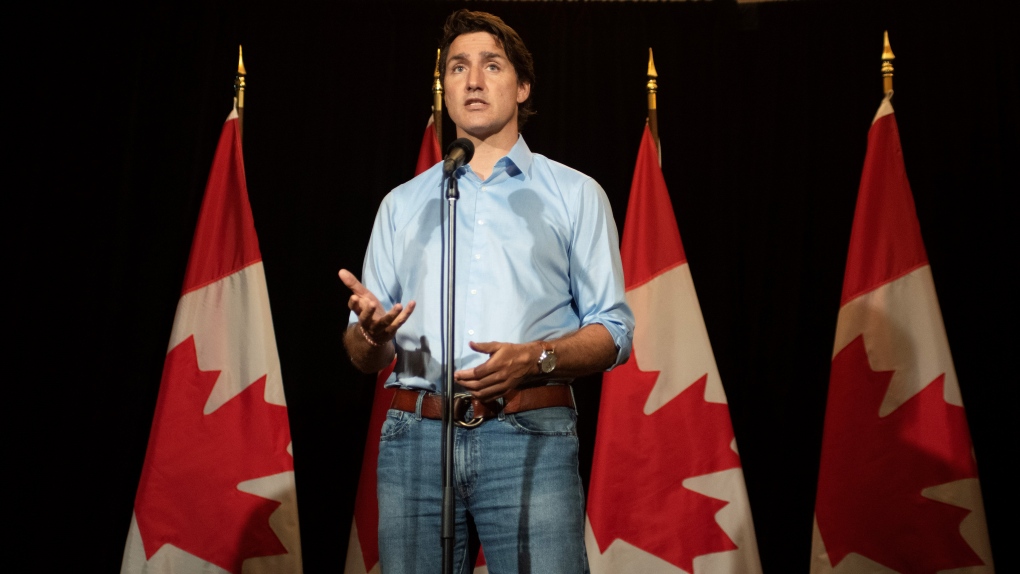
Prime Minister Justin Trudeau makes a statement about the wildfires in Western Canada in Charlottetown, Sunday, Aug. 20, 2023. He and the rest of his cabinet is in the city for a retreat beginning Monday. THE CANADIAN PRESS/Brian McInnis
I am merely a simple man, so I don’t understand the doings of my betters. We are in a climate emergency; I must give up decadent items like plastic wrapped meat to save the planet; however, the government packs up the whole cabinet along with the standard assortment of security, aides and advisors and ships them off to PEI for a Cabinet meeting. How many planes did this take? Why could this meeting not happen in Ottawa when they are all in the city? Are they not worried about their carbon footprint. Why does it seem like they are doing the sort of thing they have passed taxes to disincentivize?
Truthfully, the Ministers meeting offsite is fine with me. It is the hypocrisy of a jet-setting elite imposing evergrowing costs on such things for us. Just as there is the hypocrisy of the elites saying they are worried about high housing and rental costs while profiting from being landlords. 31% of the ministers in the new cabinet are landlords.
The line on the government website is that the carbon tax is a price on carbon pollution. Such a tax is most visible when we use carbon directly, such as by gassing up our cars or heating our homes; however, it works its way into almost every aspect of your life. Food and other goods need to be shipped, which uses fuel. Those costs will be passed on to you. Everything will get more expensive, and that is the point. The taxes have to cause pain to enough people that they change their behaviour. This means eating less meat, driving less, putting off holidays, and delaying significant purchases. “By 2030, when the price of carbon is expected to reach $170 per tonne, most households will see a net loss, despite the rebate payments offered by the federal government to offset the surcharge.” Guilbeault says the rich will pay more because they consume more. This is true, but they are not the ones who will have to scale back their lifestyles; they pay for their sins like old-time Catholics paying for indulgences. They will be able to pay the price to keep their lifestyle or have it paid for by the taxpayers. How much more will it have to hurt before you have to adjust your lifestyle?
I am writing to clarify my thoughts on whether the liberal democracies are in decline, are our best days over, and will my daughter have to settle for a lower standard of living moving into the future?
Liberal democracies are facing the rise of geopolitical challengers and have seen increasing illiberalism internally on both sides of the political spectrum. Could they tear themselves apart through internal struggles or fall behind the other global powers? Is this inevitable? Is the best we can hope for is a gradual and genteel decline?
I hope not. Besides being my selfish reasons for wanting continual growth, prosperity and freedom, it is better for the world as a whole that we remain so. While things are not looking great right now, some historical perspective might help.
The liberal democratic order has seemed in danger before. The late ’60s and 70s and early ’80s were a time of tension, with civil unrest, unpopular and unsuccessful wars, economic stagflation and global communism on the march. Crime in the US spiked, and people felt the civil order was collapsing. The movies of the period and the early 80s resonated with distrust of government and society decay. Yet just over a decade later, the USSR had fallen, democracy was rising worldwide, and the West’s technological abilities were light years ahead of the rest of the world. The USA was left as the world’s hyperpower and political scientists had declared liberal democracy had won, and we had reached the end of history.
In the ’30s, the Western liberal democracies were suffering through the economic crisis of the great depression; strongmen like Hitler, Mussolini and Stalin seemed like models of the future and imperial Japan on the march. Yes, it required World War Two to reestablish liberal democracies as the primary force in the world and a bulwark against the forces of communism. Still, we emerged from that crisis in a much stronger position that looked possible a decade earlier.
The point of these two examples is that liberal democracy is often counted out but has proven highly resilient, and it would be a mistake to assume the worst currently. But Liberal democracy does not just survive because it is destined to; it requires that its citizens believe in it and, if needed, fight for it.
The Canadian Press released a piece, “Poilievre’sConservative party embracing language of mainstream conspiracy theories,” and I feel gaslit. All the major networks, including CBC, CTV and Global, picked up this story. They say Poilievre’s negative comments about the World Economic Forum (WEF) are part of a debunked conspiracy, but they don’t discredit the heart of their premise.
Let’s start with the opening statement and the whole piece’s thesis. “Conservative Leader Pierre Poilievre has been hitting the summer barbecue circuit with ramped-up rhetoric around debunked claims that the World Economic Forum is attempting to impose its agenda on sovereign governments.”
Firstly, everyone agrees there is a WEF; this is not some group that conspiracy theorist says exist without any proof, such as the Illuminati or Satanic cults. Yes, many people who buy into these things regard the WEF as an element of more extensive and much uglier conspiracy theories. Still, I am keeping with what is proveable and documented for this post. The WEF has a website; what does it say its mission is…” The Forum engages the foremost political, business, cultural and other leaders of society to shape global, regional and industry agendas.” Also, “We believe that progress happens by bringing together people from all walks of life who have the drive and the influence to make positive change.”
So they want to shape “global, regional and industry agendas,” while this might not be quite the “imposing” used in the article, they do have an agenda they want to enact using influence on leaders in critical sectors, including government. I don’t think that the mission statement of the WEF debunks the claim that the WEF is “attempting to impose its agenda on sovereign governments.”
Further into the article, “The Conservative party also recently sent out mailers with a poll asking people to tell Prime Minister Justin Trudeau who they think the prime minister should stand with: working Canadians or the World Economic Forum.
The wording implies Trudeau’s cabinet is beholden to the latter.”
The article uses wiggle words to argue that this is all a conspiracy; “beholden” is such a word, as was “imposed” in the opening statement. Instead of beholden, how about we use “heavily influenced by”. Is there any proof of this influence? What if the Deputy Prime Minister was a member of the Forum’s Board of Trustees? Is it possible that her connections to the WEF influence her thinking on policy, and is this significant, considering she is also the finance minister?
What if people likethe Deputy Executive Legal Officer to the Chief Justice of Canada, the Leader of Canada’s New Democrats, the Director of the National Housing Council, the Ambassador of Canada to the European Union, the Minister of Citizens’ Services, Employment and Social Development Canada and several Liberal MPs are listed on their page as members of the WEF’s Forum of Young Global Leaders? Would that show any level of influence on our political class.
What does Klaus Schwab, founder and executive Chairman of the World Economic Forum, say about their tactics, particularly Canada?
The head of the WEF says they penetrate cabinets and is proud that at least half of PM Trudeau’s cabinet is on board. It might be easier to dismiss the WEF as a globalist conspiracy if its founder was not suggesting that Canada has one of the most heavily penetrated cabinets in the world.
It would also be easier to dismiss all this as conspiracy if Klaus Schwab did not write a book, “COVID-19: The Great Reset“, which presents COVID as a unique opportunity to reshape the way corporations and government function and to accelerate the WEF agenda. In this book, the term Build Back Better was used; very soon after this, leaders worldwide were parroting the book’s talking points about a reset, including our PM.
Go about two minutes in, followed by 3 minutes in; if you want to just hear him say the words.
So where is the conspiracy? Regardless if we think the WEF goals will save the world or reduce human freedom, we should be able to discuss these goals and decide as citizens of a sovereign nation if and how we want to adopt them. Why is the leader of a political party not allowed to say he opposes this without being called a conspiracy theorist? If I were a conspiracy theorist, I might have some ideas why?
This is my second post about AI; the first was positive and upbeat. I was impressed with ChatGPT’s capabilities and saw it opening new ways of doing creative work. I still think that is possible, but the writer and actor strikes are showing the dark side of its use. Scanning actors once and having total control over their image forever seems creepy. Netflix’s plans for using AI seem to further this trend.
What happens if it replaces jobs and does not create new ones for those displaced? What if the new jobs require skills and abilities that exclude a great many people? I have no doubt that there will be jobs in the future that we can not currently imagine, but will they be only for the few? What happens to those left behind by the forces of technology. Do we enter a world where AI and technology allow a great many people to live lives free of work, where we all receive some sort of Universal Basic Income or do those displaced become a permanent underclass.
I don’t pretend to know where any of this is going, but I hope we avoid a future where humans do crap jobs and while AIs create our cultural products.
What do you think, are we headed to a UBI utopia or a hellscape where a small elite benefits and the rest of us are left without meaningful work and live much poorer lives than we currently do? I hope for the best but fear the worst.
I decided that Facebook would be the least toxic and rage baity, and it was, in reality, pretty good. I enjoy seeing people in my life do well, except for that one guy; he knows who he is. As I was saying, Facebook was not a bad experience. I notice less news in my feed, which might be good for avoiding rage bait, but I think the fallout from Bill 18 has left many people less informed, as I suspect many people now basically stumble on to news stories rather than read news sites or get a paper.
I still will ensure I am not clicking on stories designed to cause outrage. But I will dip my toe back into Facebook. Twitter is far too well designed to generate a reaction for me to return to for a while.
I have been calmer and less stressed since being off Twitter (or is it now X) and my angry political podcasts. I am going to be watchful over I am feeding my brain.
One of the reasons I was not posting for a while was I was not feeling great mentally and did not think I could post something without being negative. I have been in a crappy mood, and it was hard to be motivated. One of the reasons was that I was not careful with my media diet. I have also been a big follower of the news my whole life, but lately, I consumed a lot of rage bait. I was getting angry, sad and worked up over things that I had little influence over, often had little influence on me.
Therefore my plan for August is to be very careful with what I consume. I deleted Twitter, Facebook and Reddit from my phone. I am going to stop listening to polemical podcasts. I will still consume news, but I will avoid anything that is rage bait. I will see if this helps.
What are you feeding your mind, and do you need a detox?
My loyal readers, both of you, will have noticed I have been absent for a bit. I got distracted for a bit, but I am now back. I started a blog primarily to force myself to write regularly, and I still want to do that. My goal is to publish daily, I don’t know what that content will be, but I will figure it out. Talk to you soon.
The honest answer is that I have always wanted to maintain a regular writing habit. I find that I tend to think best when I think out loud or on the page, so I decided I would make a post a day and see if it helped work out some ideas. I like to write to figure out what I think. I am hoping to unblock some creativity.
Ok, so I could have done that in a journal or a Word doc; so why a blog where people can see it. (Of course, this audience is more notional than real.) There are three main reasons: firstly, it scared me. One of my concerns with getting older is falling into patterns where I am no longer challenged in some way. Writing in a public fashion, makes the whole thing seem a little more serious and makes me want to be clearer in my thoughts than I would be if I was writing for myself.
I spend money on getting a two-year subscription to WordPress. I hope that the idea I am wasting money by not posting will make me post daily. (This technique has failed me in the past, as my Planet Fitness membership demonstrates.) I spent the money upfront, I might as well use the tools for which I paid. ( I Plan to go to the gym tomorrow, for real this time.)
Finally, I did it without really thinking about it, and that is on purpose. I tend to plan rather than do. I have had many periods where I read fitness books rather than work out, read productivity books rather than work on the project that needed doing and so on. I had the thought I wanted to try a blog and rather than do a bunch of research and never get around to a blog, I figured I would just start one. I will figure out the features of WoodPress as I go. I likely have made mistakes and maybe could benefit from spending some time watching tutorials, but I wanted to get in motion rather than having a good plan which is never executed. I will get better by doing.
The thing about signing up for group activities with a group of people you don’t know is that you get to live and work with people you don’t know.
In a new group there are going to be people you like and those you don’t. I have decided that rather than be irritated by some of those people I want to use it as a learning experience.
Often those that irritate us are those we can learn the most from. What is it I am finding irritating. Is it a mirror on me. Does that person reflect something that I don’t like or fear about myself. Do they represent something I want to be myself.
Being irritated is a low energy state, learning and being curious is a higher energy.
Note this is all aspirational. I still get irritated all the time but I am trying to do better.
Throughout writing this I kept writing irradiated instead of irritated. I don’t recommend getting irradiated as a learning experience.
















 retirereadreflect.ca